

A Look Into My Sketchbook
How I come up with a class

Today, I'd like to share a glimpse into the sketchbook I used to develop the ideas for my third solo class: A Pollinator’s Garden. I was invited as a guest teacher to the Art Soul Living community, founded by the incredibly kind Ida Andersen-Lang. I had free range to create the class and was encouraged to follow my inner joy. This meant I had to start from nothing, the dreaded blank page stared me in the face and giggled.


When I’m generating ideas, the best way for me to start is by moving my hands. This gets my brain working and helps me make connections that I can only recognize if I see them on paper. So, I go to my favorite subject, use my favorite colors, and work with techniques I really enjoy. This is no time to get out of my comfort zone.


I started using wax crayons to draw shapes, still with no concrete idea in mind. Flower silhouettes began to appear; I have been drawn to flowers this year. Still using the wax crayons, I explored more energetic shapes using colors I like. I then switched to acrylic paint, but my painting was too tight; I wanted my flowers to be looser and more playful. I realized I needed to look at references to gain a better understanding. I used past paintings as references. You can see my first Substack post right here, where I share my flower sketchbook.

I began sketching with a brush and paint to create looser, more dynamic strokes. After a few pages, I realized I wanted to paint flowers, but I needed a theme: flowers, gardens, meadows, bouquets, bees, butterflies, insects, ladybirds, birds, pollinators. Pollination seemed like a fascinating topic to explore and serves as a perfect analogy for creative work. As artists, we seek inspiration everywhere and go from one source to another in search of ideas.


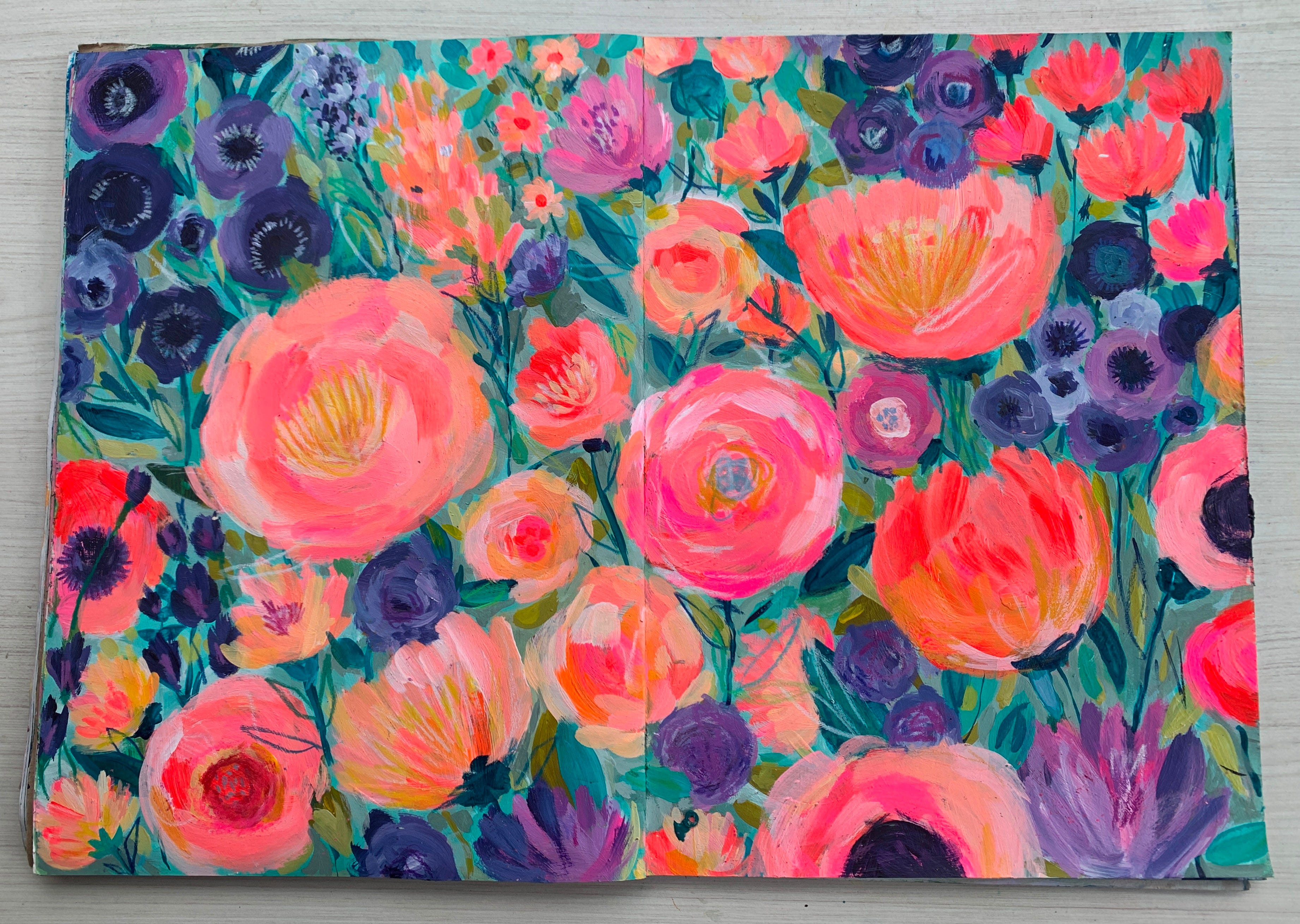
I used expressive, bold, and playful marks, and everything started to come into focus. I knew I had it—a playful, colorful, joyful class. I had two lessons: a flower meadow and bumblebees. For my third lesson, I decided to paint a hummingbird. I love them so much and get to see them every day because we planted flowers that attract them.


The development process took almost two months, plus an additional two weeks for recording the actual lessons. You might think it’s too much work to do all this before even starting, but I need to have a clear plan so I know what I will be doing. I don’t follow the original paintings exactly; I always give myself space to improvise and allow mistakes to happen. I use the sketchbook as a reference, and when I start recording, I have a color palette and composition that I genuinely enjoy.
I hope you enjoyed this post and that you join me for this class. You can find more information and enroll using the link below.


